





Ever feel like your brain is completely fried by noon—but you can’t really point to what you’ve actually done?
Welcome to decision fatigue.
It’s what happens when your brain has had enough—not from doing, but from deciding. And moms? We make a ridiculous number of decisions every day, usually before we’ve even finished our first cup of coffee.
This post will help you recognize the signs, connect the dots between your decision fatigue and your roles, and find a way to stop the overwhelm before it snowballs.
How Many Decisions Do Moms Actually Make?
Let’s run through just a partial list of morning decisions:
- What time to wake up (and if you can hit snooze)
- What’s for breakfast
- Who needs what packed for lunch
- What can go in the laundry while breakfast is cooking
- What needs to be signed, remembered, or found for school
- What mood each kid is in and whether you need to shift gears
- What’s for dinner, based on what needs to thaw or be prepped
That’s before 8:00 a.m.
Multiply that by the number of people in your house, the complexity of your day, and the emotional energy it takes to stay calm during chaos—and you’re making hundreds of micro-decisions before most adults are out the door.
No wonder you’re already tired.
Why It Feels Like You’re Always Mentally Spinning
Every role you play comes with decisions.
When you’re the default parent, the household manager, the emotional glue—you’re also the decision-maker for everything from what brand of toothpaste to buy to how to handle a tween meltdown about a lost hoodie.
Your brain is constantly scanning:
- What needs attention?
- What am I forgetting?
- What could go wrong?
This constant, low-level mental spin is not laziness or a lack of motivation. It’s your brain’s way of saying, "Too much."
Decision Fatigue vs. Burnout: What’s the Difference?
They’re related, but not the same.
- Burnout is long-term exhaustion from chronic stress.
- Decision fatigue is short-term overload from having to make too many decisions in a day (or hour).
If you’ve ever had to pick between 50 shades of white paint or stood frozen in the grocery aisle trying to choose a brand of ketchup, you’ve felt decision fatigue. Add emotional decisions, and it’s 10x worse.
How Mental Load Adds to Decision Fatigue
Your brain is not just making decisions—it's making decisions based on roles you didn't even realize you're still holding onto.
You might be carrying roles like:
- The only one who knows where everything is
- The peacekeeper who smooths out family tension
- The holiday planner who makes the magic happen
- The teen whisperer who always knows the right thing to say
Each of those comes with invisible responsibilities. And the more roles you carry, the more decisions you make. Some are logistical. Some are emotional. Some are completely unnecessary—but you've been doing them so long, they feel like defaults.
📄 This Is Where the "Role With It" Worksheets Help
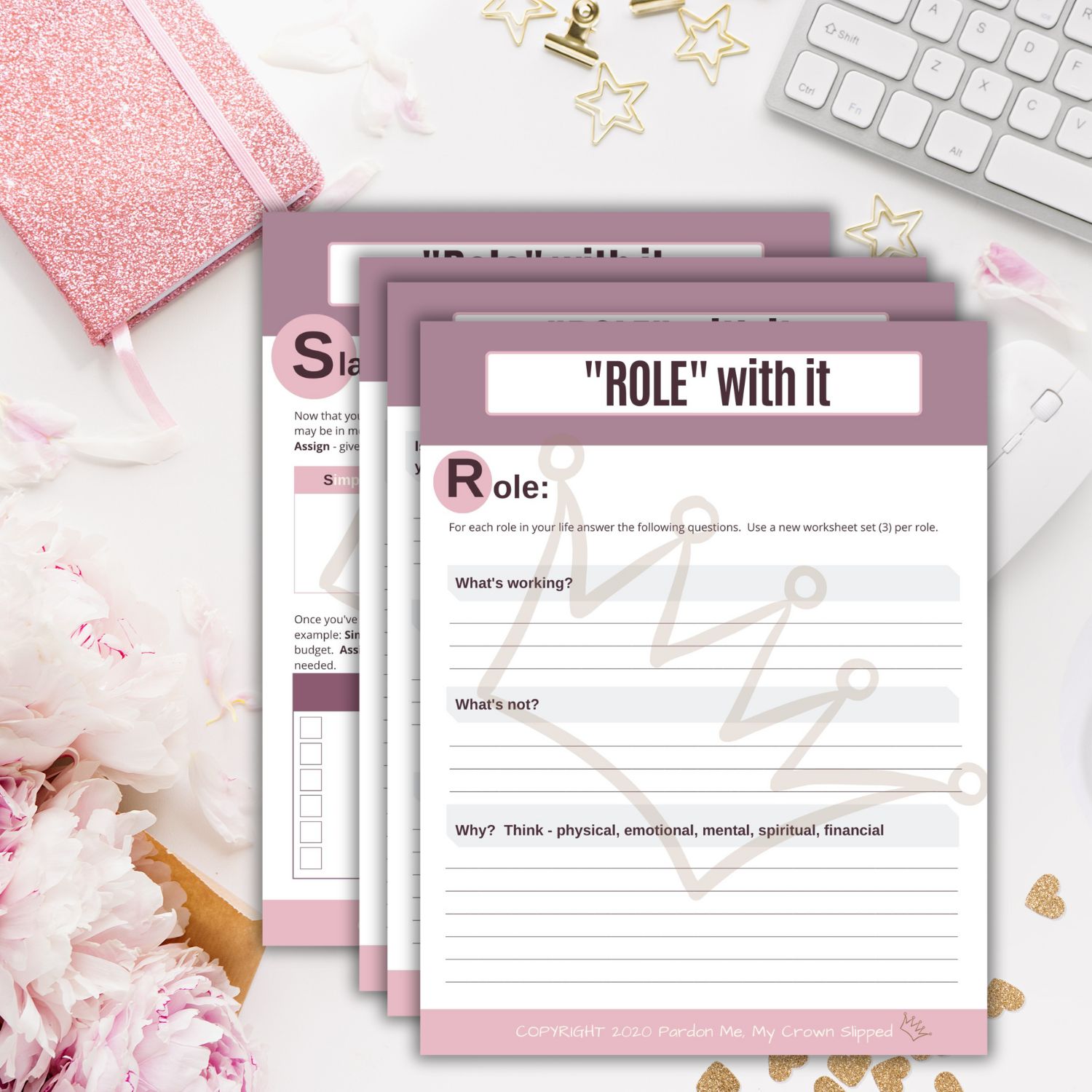
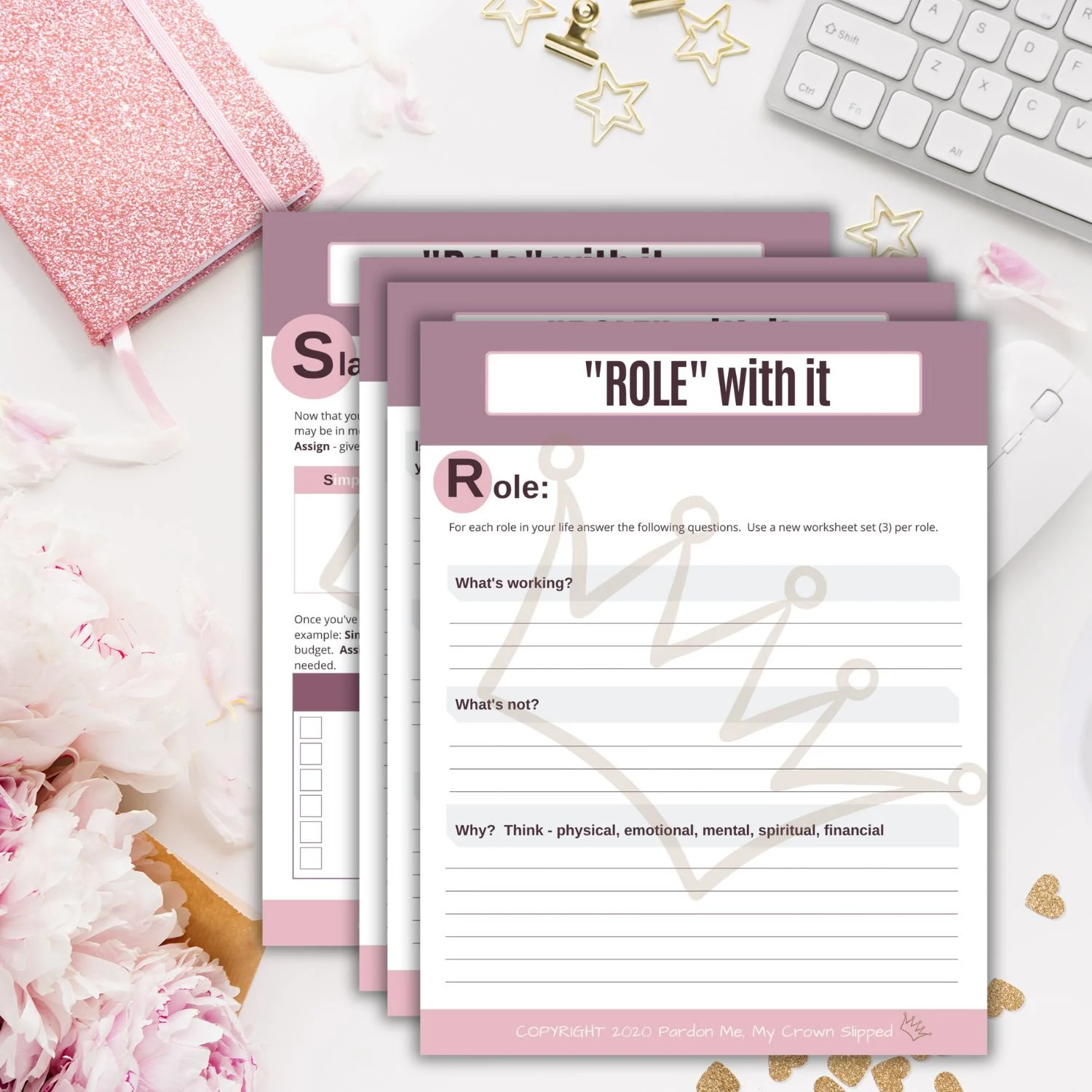
Not sure what roles you’re actually carrying? Not even sure which ones are worth keeping?
That’s exactly why I created the Role With It Worksheets.
They’ll walk you through evaluating each role you play: what’s working, what’s not, whether it supports your family’s values, and if it can be simplified, assigned, or eliminated altogether.
3 Sneaky Signs You’re Dealing with Decision Fatigue
1. You get paralyzed by simple choices.
Can’t decide what to cook? What to wear? What to do next? It’s not because you’re flaky. It’s because you’re tapped out.
2. You scroll instead of doing.
Your brain avoids making one more choice, so it retreats into numb-mode: scrolling, zoning out, cleaning something random.
3. You overthink every tiny thing.
Should I text the teacher? Should I respond now or later? Should I say yes to that birthday party invite? Overanalyzing = decision fatigue in disguise.
Reducing Decisions = Reclaiming Energy
Let’s be honest—you’re never going to have a totally decision-free day.
But you can reduce the clutter. Here are a few ways to start:
1. Default as much as possible.
Pick one breakfast, one laundry day, one meal planning system. The fewer choices you have to make, the better.
2. Offload roles that aren’t yours.
If you’re managing your teen’s social calendar and they’re 15? It might be time to pass the baton.
3. Pre-decide routines.
What happens after school? After dinner? On Sunday nights? Create rhythms that don’t require you to reinvent the wheel daily.
4. Ask: Is this necessary?
You’d be amazed how many things are habitual but not essential. Let them go.
You Don’t Need to Do It All Right Now
You are not a machine. Your brain is tired because it’s working overtime to hold everyone’s life together.
Start by naming your roles.
Challenge the idea that you have to be amazing at all of them.
Reduce the decisions wherever you can.
And when you’re ready to reclaim some mental bandwidth?
Grab the Role With It Worksheets
One download. Big difference.
Because peace isn’t about doing more. It’s about doing less of the stuff that doesn’t need to be yours anymore.
You’re doing great. Let’s make it feel easier.
In Case You Missed It: 👉
🧠Mental Load is More Than Just Doing Everything
✨You Don't Have to Be Good at Every Role